
Selecting the right adhesive tape for paper crafts, office tasks, or document repair requires balancing the tape’s adhesive strength with the structural integrity of the paper. Using a high-tack permanent tape on delicate tissue paper inevitably leads to tears, while using a low-tack tape on heavy cardstock results in peeling edges. To achieve a secure hold without causing surface damage or leaving sticky residue, you must match the tape’s adhesive formulation to the specific weight, texture, and porosity of your paper.
Understanding Paper Weights and Adhesive Requirements
Paper strength and vulnerability depend heavily on its weight, manufacturing process, and surface finish. Paper weight is measured in grams per square meter (gsm). Thin papers, such as tissue paper, tracing paper, and newsprint, usually fall below 60 gsm. These materials have thin, loosely bound fibers and low tensile strength, making them highly susceptible to tearing under tension. Standard office printer paper and notebook sheets generally range from 70 gsm to 100 gsm, offering moderate structural integrity but remaining vulnerable to surface delamination if an adhesive bonds too aggressively. Heavy cardstock, watercolor paper, and poster boards exceed 120 gsm, featuring dense, rigid fibers that resist bending and require robust adhesion to stay secured.
Adhesives on pressure-sensitive tapes interact directly with these paper fibers. Tapes are generally classified into three adhesive categories: low-tack (removable), standard (permanent), and high-tack. Low-tack adhesives are formulated to create a temporary bond that releases easily without pulling up the underlying paper fibers. Standard adhesives provide a balance of immediate grab and long-term hold, designed to remain permanent on standard paper weights. High-tack adhesives are engineered for maximum initial grab and shear resistance, making them ideal for rigid materials that exert constant outward pressure when folded or mounted.
Products mentioned in this guide
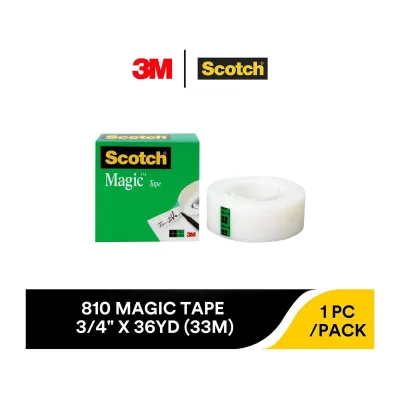
4 Lazada user ratings
Compatible with all Scotch Brand dispensers, Reliable and trusted brand, Invisible tape that blends seamlessly,
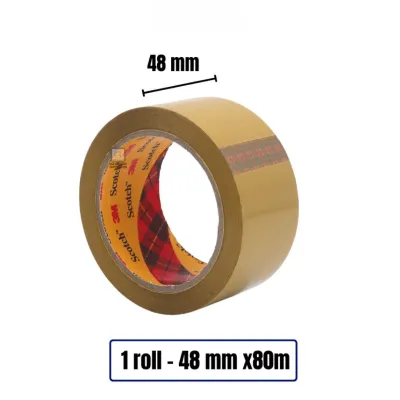
180 Lazada user ratings
aiya I didn't see the size correctly, wanted to buy the small one haha. wonder what I will use it for now...but looks like normal tape so sh…Read full reviewShow less
aiya I didn't see the size correctly, wanted to buy the small one haha. wonder what I will use it for now...but looks like normal tape so shud be ok. its not old.
Nicely packed in a box and received in good condition. No doubt on performance for 3M product. Works as intended.
Delivered in 2 days! Item as described. Sticks well compared to other brands. Thank you for fast shipping.
got all 6 I got the wrong size lmao it's my mistake have to keep and use it somehow
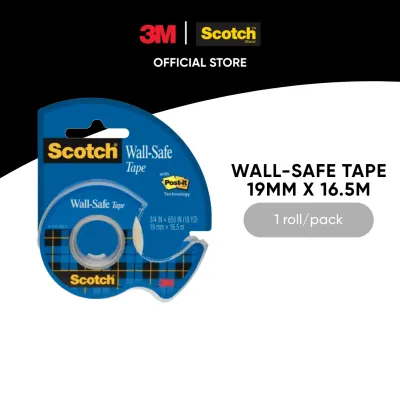
94 Lazada user ratings
Ideal for home, office, and school use, Removes cleanly without damaging walls, trusted brand.
Came in good condition. Fast delivery.
Stickiness like a Post-it
Not reviewing
Prices are valid at publication and may change. Please refer to the product page for the latest price.
Surface porosity and coatings also dictate how tape behaves over time. Uncoated papers have open, porous surfaces that allow liquid or semi-solid adhesives to penetrate deep into the fiber network, creating a mechanical lock that makes clean removal extremely difficult. Conversely, coated papers—such as glossy photo paper, satin brochures, or clay-coated cardstock—have a sealed surface barrier. While this barrier prevents the adhesive from penetrating deeply, it can sometimes cause the adhesive to shear off the tape backing during removal, leaving a sticky, unsightly residue on the document.
Selecting Tape Types for Thin, Standard, and Heavy Papers
Matching the tape type to the paper weight is the most effective way to prevent damage. For thin and delicate papers under 60 gsm, low-tack removable tapes are the safest choice. These tapes are often marketed as drafting tapes or removable matte tapes. When selecting a tape for delicate surfaces, perform a visual check: the tape should have a matte finish and feel slightly dry to the touch rather than highly sticky. The low peel adhesion of these tapes ensures that the adhesive releases its grip before the delicate paper fibers reach their breaking point. This is particularly crucial for tracing paper and pattern tissue, where preserving the integrity of the sheet is paramount.

For standard office and printer papers ranging from 70 gsm to 100 gsm, you can choose between standard transparent tape and matte-finish invisible tape. Matte-finish tapes typically utilize a gentle acrylic adhesive that allows for minor adjustments immediately after application before curing into a permanent bond. Standard glossy transparent tapes, on the other hand, often feature a more aggressive adhesive that bonds instantly. If you anticipate needing to remove the tape later, opt for a removable matte tape. If the application is permanent, such as sealing an envelope or repairing a non-critical torn page, standard transparent tape provides a reliable, long-lasting hold.
Heavy cardstock, textured papers, and rigid crafting materials over 120 gsm require high-tack or specialized double-sided craft tapes. Because cardstock is thick and stiff, it possesses structural memory, meaning it will naturally try to spring back to its original flat shape when folded or curved. Standard office tape lacks the shear strength to resist this constant tension, leading to lifting corners. High-tack tapes or heavy-duty double-sided tapes are necessary to overcome this resistance. However, the trade-off is permanent bonding; attempting to peel high-tack tape from cardstock will almost certainly result in fiber tearing and surface delamination. For textured papers like cold-press watercolor sheets, the adhesive must also be thick enough to conform to the microscopic valleys of the paper surface to establish a secure bond.
Application and Removal Techniques to Prevent Damage
Even with the correct tape selection, improper application and removal techniques can still cause damage to your paper projects. Before applying any tape, ensure the paper surface is completely dry and free of dust. Environmental humidity plays a significant role in paper strength; high humidity softens paper fibers, making them far more fragile and prone to tearing during tape adjustments. Additionally, ensure your hands are clean and dry. Natural skin oils, lotion residues, and moisture can contaminate the adhesive, reducing its effectiveness and potentially leaving greasy stains on the paper over time.
If you must use a standard tape on a delicate paper but worry about tearing, you can temporarily reduce the tape’s initial tack. This technique, often called de-tacking, involves pressing the adhesive side of the tape lightly against a clean, lint-free cotton fabric—such as a clean t-shirt—before applying it to the paper. The cotton fibers slightly mask the adhesive, lowering its bonding strength. However, use this method with caution: do not use it on archival documents, valuable artwork, or projects where absolute clarity is required, as the transferred lint will remain visible under the tape.
When it comes to removing tape, the angle and speed of your pull are critical. Never pull the tape straight upward at a 90-degree angle, as this exerts maximum vertical tension on the paper fibers, virtually guaranteeing a tear. Instead, peel the tape back slowly and smoothly at a very low angle, keeping it almost flat and parallel to the paper surface. As you peel, place your fingers on the paper directly adjacent to the peeling line, applying gentle downward pressure. This supports the paper fibers and prevents them from lifting with the adhesive. If you feel significant resistance or notice the paper beginning to delaminate, stop immediately. Do not attempt to force the removal; instead, evaluate whether the document can remain taped, or consult a professional conservator if the item is irreplaceable.
Archival and Craft Considerations for Long-Term Preservation
For long-term projects, scrapbooking, or preserving important documents, standard utility tapes are highly unsuitable. Standard tapes contain acidic adhesives and plastic backings that degrade rapidly when exposed to air, light, and fluctuating temperatures. Over time, these adhesives undergo chemical breakdown, turning yellow, brittle, and oily. This process leads to adhesive staining, where the acidic compounds migrate into the paper fibers, causing permanent brown discoloration and making the paper brittle.
To prevent this chemical degradation, always look for tapes explicitly labeled as acid-free, archival-safe, or certified to have passed the Photographic Activity Test (PAT) in accordance with ISO standards. Archival-safe tapes utilize stable, non-yellowing acrylic adhesives that do not generate harmful acids as they age. These tapes maintain their transparency and flexibility over decades, ensuring that your documents and photographs remain undamaged. When budgeting for preservation projects, investing S$3 to S$8 in a high-quality roll of archival tape is a small price to pay to protect irreplaceable family records or artwork.
For highly valuable, historic, or irreplaceable items, the best preservation strategy is to avoid applying adhesive tape directly to the object altogether. Even archival-safe tapes can be difficult to remove after many years. Instead, utilize non-adhesive mounting alternatives. Acid-free photo corners and mounting strips allow you to secure photographs, certificates, or drawings to a backing board without any adhesive touching the item itself. The corners or strips hold the edges of the document in place, allowing for easy removal or inspection in the future without any risk of tearing or adhesive residue.
Frequently Asked Questions (FAQ)
Can standard transparent tape damage thermal paper or receipts?
Yes, standard transparent tape can severely damage thermal paper. Receipts and thermal labels are coated with a heat-sensitive chemical layer that reacts to heat to produce text. The solvents, adhesives, and plasticizers present in standard utility tapes react chemically with this thermal coating. Over weeks or months, this chemical reaction causes the printed text directly beneath and around the tape to fade, turn white, or disappear entirely. If you need to preserve a thermal receipt, avoid taping over the printed areas, or make a digital scan or photocopy of the receipt for long-term storage.
How should I test a new tape on an unfamiliar paper type?
To test a new tape, always perform a spot test on a scrap piece of the identical paper or in an inconspicuous area, such as the back margin of the document. Cut a small strip of the tape, apply it to the test area, and press it down firmly to simulate actual use. Let the tape sit for at least ten to fifteen minutes to allow the adhesive to bond with the fibers. Gently peel the tape off using the recommended low-angle removal technique. Inspect the paper surface under good lighting for any signs of fiber lifting, tearing, color transfer, or sticky residue before proceeding with the main application.
Is double-sided tape a safer alternative for heavy cardstock?
Double-sided tape is highly effective for securing heavy cardstock because it distributes the holding force evenly across the entire contact surface, preventing the edges of rigid paper from lifting. However, it is not necessarily safer if you plan to remove it later. Most double-sided tapes designed for crafting feature permanent, high-tack adhesives that bond aggressively to both surfaces. Because the tape is sandwiched between two layers of paper, removing it without causing catastrophic tearing to at least one of the paper surfaces is extremely difficult. Use double-sided tape for permanent assembly, but rely on low-tack removable options if repositioning is required.
Community discussion
Share your experience or ask a question. Comments are reviewed before publication.