
Choosing between Ohuhu and Copic markers is one of the most significant decisions an artist can make when building an alcohol-based marker collection. While Copic has long been the industry standard for professional illustrators, designers, and mangaka due to its exceptional build quality and extensive refill system, Ohuhu has emerged as a highly popular alternative by offering vibrant, blendable markers at a fraction of the upfront cost. Deciding which brand is right for your studio involves looking beyond the price tag to evaluate nib construction, ink flow mechanics, paper compatibility, and long-term maintenance.
Comparing Nib Design, Build, and Ink Flow Mechanics
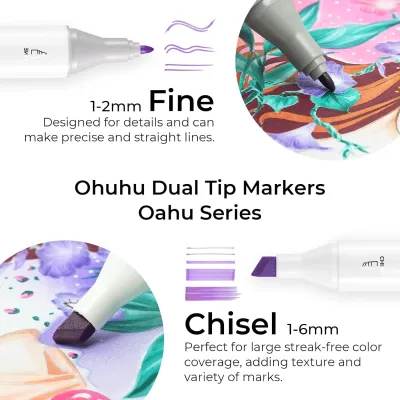
The physical interface between your hand and the paper determines how much control you have over your linework and shading. Alcohol markers typically feature dual-tip designs, combining a broad chisel tip for filling large areas with either a fine bullet nib or a flexible brush nib for detailed rendering.
Nib Materials and Flexibility
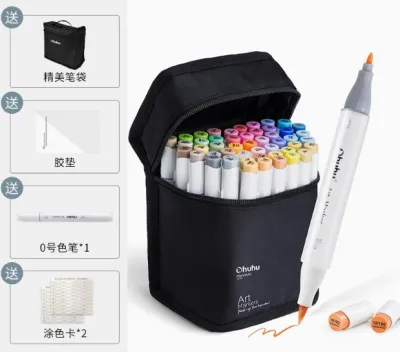
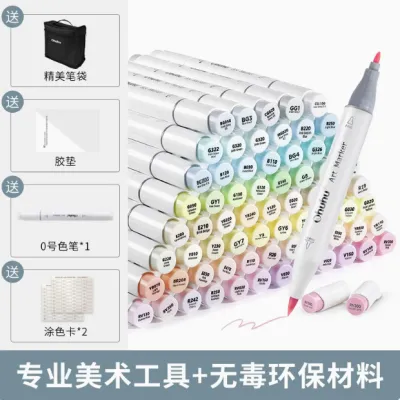
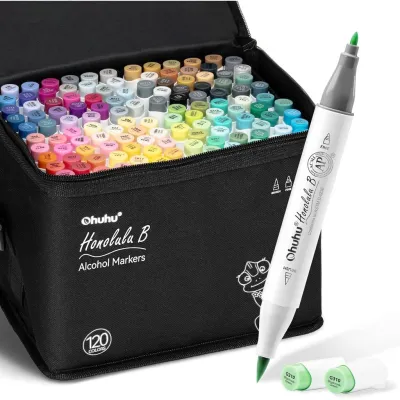
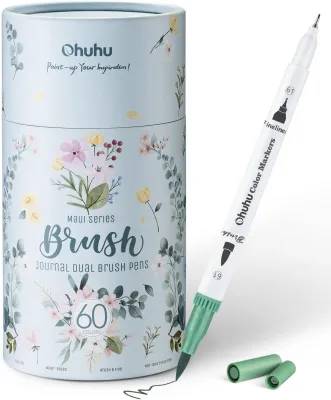
Copic markers, particularly the Sketch and Ciao lines, are famous for their “Super Brush” nibs. Made from a durable, rubber-like polyurethane elastomer, these brush tips bend smoothly under pressure and snap back to their original shape instantly. This springiness allows for highly expressive line weight variation, mimicking a traditional paintbrush. Ohuhu markers, specifically the Honolulu series, feature a fiber-based brush nib. While these fiber nibs are soft and highly responsive out of the box, they tend to have a slightly softer “give” and can splay or fray over time if used on highly textured, abrasive papers.
Products mentioned in this guide
49 Lazada user ratings
No smell and has a variety of colours
I love the packaging! It is soo safe!
lively & lovely colours
Great for drawing,
nice markers
1 Lazada user ratings
I am content with everything because the parcel matches the description. 🚀
Prices are valid at publication and may change. Please refer to the product page for the latest price.
Internal Ink Reservoirs and Capillary Action
Both brands rely on an internal polyester fiber core to hold the alcohol-based ink reservoir. However, the efficiency of the ink delivery system depends on how the capillary action is tuned between the reservoir and the nib. Copic’s internal design is optimized for highly consistent gravity-fed capillary action, ensuring that ink flows smoothly to the nib even during rapid, sweeping strokes. Ohuhu markers also deliver a generous ink flow, though users may occasionally observe a slightly heavier saturation when a marker is brand new, which gradually stabilizes after a few uses.
Physical Testing Protocol for Nib Performance
To evaluate the nib quality of either brand, you can perform a simple three-step test on a sheet of scrap marker paper:
- The Snap-Back Test: Press the brush tip firmly against the paper to bend it to a 45-degree angle, then lift it quickly. A high-quality nib should return to a sharp point immediately without leaving a curved or splayed tip.
- The Saturation Check: Draw a continuous, slow line across the page. Observe if the ink flow remains perfectly consistent or if the line begins to dry out and fade toward the end of the stroke, which indicates a bottleneck in the marker's internal reservoir or capillary feed.
- The Fine-Line Trial: Using only the very tip of the brush, attempt to draw a series of parallel hairline strokes. This tests the precision of the nib's point and its ability to deliver micro-amounts of ink without pooling.
Ergonomics and Barrel Construction
The physical design of the marker barrel affects comfort during long drawing sessions. Copic Sketch markers feature an oval, roll-resistant barrel that sits comfortably in the hand and prevents the marker from rolling off your drafting table. Ohuhu Honolulu markers utilize a rounder, slightly thicker barrel that provides a substantial grip, though they can roll easily if not placed back in their carrying case. Both brands use color-coded caps with alphanumeric color codes, but it is important to verify the actual ink color on paper, as plastic cap colors can vary slightly from the dried ink.
Evaluating Blendability and Color Vibrancy on Paper
Both Ohuhu and Copic utilize dye-based, alcohol-soluble inks. This chemistry allows the ink to dry rapidly through solvent evaporation, enabling artists to layer colors and create smooth, seamless gradients without dissolving the paper fibers.

Ink-Paper Interactions
The performance of any alcohol marker is heavily dependent on the paper medium. On thin, uncoated copy paper, the ink will rapidly bleed through the fibers and feather outward, making precise blending nearly impossible. For optimal results, use a heavy, smooth-surfaced marker paper (typically 75gsm to 250gsm) with a bleed-resistant barrier or a high-quality Bristol board. In Singapore’s naturally humid climate, the evaporation rate of the alcohol solvent can be slightly slower than in dry environments. This extended drying time can actually work to your advantage, providing a slightly longer window for wet-on-wet blending before the ink sets.
Step-by-Step Swatching and Blending Test
To verify how well these inks blend on your specific paper stock, execute this wet-on-wet blending protocol:
- Lay Down the Base: Apply a generous layer of a light-toned marker to saturate the paper fibers.
- Introduce the Shadow: While the base layer is still wet, apply a medium-toned marker to the edge of the saturated area.
- Feather the Transition: Immediately take the lighter marker and draw small, circular strokes over the boundary where the two colors meet.
Observe how smoothly the pigments disperse. High-quality alcohol ink should dissolve and merge seamlessly without leaving harsh, visible edges or causing the paper to pill. Be careful not to oversaturate the paper with too many consecutive wet layers, as this can cause the solvent to flood the paper fibers, leading to uncontrollable feathering beyond your pencil lines.
Verifying Color Vibrancy and Transparency
Because alcohol inks are transparent, they rely on layering to build depth. To test this, draw a single stroke of a mid-tone color, let it dry completely, and then draw a second stroke overlapping the first. Check if the overlapping section darkens predictably or if it becomes muddy. Cross-reference your physical swatches with the manufacturer’s official color charts under neutral, natural lighting to verify color accuracy and transparency.
Color Range, Refill Systems, and Long-Term Maintenance
For professional artists and dedicated hobbyists, a marker is an investment that should last for years. This longevity depends entirely on whether the marker system is refillable and if the nibs can be replaced when worn.
Refill Mechanics and Nib Replacement
Copic has set the standard for sustainability with its highly efficient refill system. A single bottle of Copic Ink can refill a Sketch marker multiple times, utilizing a precise dropper nozzle that inserts directly into the marker barrel once the broad nib is removed with a pair of tweezers. Ohuhu has also introduced refill inks for a selection of their color range, allowing users to replenish dry markers rather than discarding the entire plastic pen. When refilling, always follow the manufacturer’s instructions regarding the exact volume of ink to add, as overfilling can lead to ink leaking from the opposite cap or dripping onto your artwork.
Color Coding Systems
Copic uses a highly systematic color coding system based on letter-number combinations (e.g., BV08 for Blue-Violet). The letter represents the color family, the first digit represents the saturation group (blending group), and the second digit represents the value or darkness. This makes selecting blending groups incredibly intuitive. Ohuhu uses a mix of color names and numbers which, while vibrant and extensive, may require a bit more manual swatching to find perfect blending partners.
Local Availability in Singapore
Before committing to a specific marker ecosystem, check the local availability of individual open-stock markers and refill bottles. In Singapore, Copic products, replacement nibs, and ink refills are widely stocked in physical art supply stores (such as those in the Bras Basah Complex) and official online brand stores. Ohuhu markers are primarily sold in pre-packaged sets through online marketplaces and official ecommerce channels, though individual open-stock markers and refills are becoming increasingly accessible online. If you rely on specific colors for your daily work, ensure you can easily source individual replacements without having to purchase an entirely new multi-pack.
Troubleshooting and Reviving Dry Markers
Alcohol markers can dry out prematurely if the caps are not clicked shut securely. Because these markers contain organic solvents, always work in a well-ventilated room and keep caps tightly sealed when not in use. To check for dried-out markers, inspect the nib for a crusty texture or a pale, desaturated color. If a marker is only slightly dry, you can sometimes revive it by adding a few drops of pure isopropyl alcohol (99% concentration) directly to the nib, though this will dilute the pigment concentration. For clogged nibs caused by paper fibers or dried binder, removing the nib and soaking it in a small container of isopropyl alcohol for a few minutes can restore smooth capillary flow.
Price and Value Assessment for Artists in Singapore
Evaluating the true cost of ownership requires looking beyond the initial purchase price of a marker set and calculating the long-term expenses of refills and replacement parts.
Calculating Cost per Milliliter
While a large set of Ohuhu markers presents a highly attractive, low upfront cost, Copic markers are positioned as a premium, lifetime tool. To calculate the true value, compare the initial cost per marker alongside the cost per milliliter of refill ink. For example, if a Copic refill bottle costs around S$8 to S$10 and can refill a marker several times, the cost per milliliter of ink over several years of heavy use can become highly competitive with buying disposable or semi-disposable marker sets. This refillable nature also appeals to eco-conscious creators in Singapore who wish to minimize plastic waste.
Set Purchases vs. Custom Palettes
For beginners, purchasing a large, pre-curated set of Ohuhu markers (such as a 72-color or 120-color set) provides an immediate, wide spectrum of colors to experiment with. Conversely, professional artists often prefer to build a custom palette of Copic markers by purchasing individual colors (open stock) that match their specific subject matter, such as portrait tones, architectural grays, or botanical greens. This modular approach prevents you from paying for colors you will never use.
Sourcing and Authenticity
Because alcohol markers are high-value stationery items, counterfeit products are common on unauthorized online marketplaces. When purchasing markers in Singapore, always verify that you are buying from authorized art supply retailers or official brand storefronts. Counterfeit markers often use low-grade industrial solvents that emit strong, unpleasant chemical odors, dry out rapidly, and may contain non-standard dyes that fade quickly when exposed to light.
Decision Framework: Matching Markers to Your Artistic Needs
To finalize your choice, evaluate your current skill level, budget, and how frequently you plan to use the markers.
Choose Ohuhu If…
- You are a beginner, hobbyist, or student looking to explore alcohol marker rendering without a massive upfront financial commitment.
- You prefer purchasing large, pre-selected color sets that offer a broad palette immediately.
- You do not mind occasionally replacing an entire marker if a specific color runs out and refills are unavailable.
Choose Copic If…
- You are a professional illustrator, designer, or serious art student who requires absolute color consistency across different batches.
- You demand highly durable, springy brush nibs that can withstand years of daily use on various paper types.
- You want a fully sustainable, lifetime marker system where every single component—from the nibs to the ink—is easily refillable and replaceable.
Neither May Fit If…
- You require lightfast, archival mediums for fine art gallery displays; alcohol-based dyes are inherently prone to fading over time when exposed to direct sunlight.
- You work on thin, double-sided journal pages where bleed-through cannot be tolerated, in which case water-based pigment markers or colored pencils are more suitable.
Verify First Before Committing
Before investing in a massive multi-color set from either brand, purchase two or three individual markers (ideally a light, medium, and dark shade of the same color family) from both Ohuhu and Copic. Test them side-by-side on your preferred paper stock. This hands-on trial will allow you to personally experience the differences in nib flexibility, ink flow, and blendability, ensuring you make an informed decision that perfectly aligns with your creative workflow.
Community discussion
Share your experience or ask a question. Comments are reviewed before publication.