
Choosing the wrong paint marker can ruin hours of meticulous crafting, leaving you with smudged outlines, warped paper, or paint that flakes off your finished piece at the slightest touch. Deciding between Posca and Sharpie paint markers comes down to matching their distinct ink formulations—Posca’s water-based acrylic pigment versus Sharpie’s oil- or water-based formulas—to your specific project surface, desired finish, and safety needs. While Posca offers an opaque, matte, and highly layerable finish ideal for detailed studio art, illustration, and indoor crafts, Sharpie paint markers provide a glossy, highly adhesive, and weather-resistant bond that excels on challenging outdoor materials and permanent industrial applications. Understanding how these chemical bases interact with different mediums ensures your artwork remains vibrant and intact over time.
What are the core differences in ink formulation and finish between Posca and Sharpie?
The fundamental difference between these two brands lies in their chemical base and final visual appearance: Posca markers use a water-based acrylic pigment ink that dries to a flat, opaque matte finish, whereas Sharpie paint markers are most famous for their oil-based paint formula that cures to a glossy, highly durable sheen. This distinction dictates not only how the paint looks on your medium but also how you must handle the markers during your creative process.
Posca’s water-based acrylic ink is completely odorless, non-toxic, and alcohol-free, making it exceptionally safe for indoor use. Because the binder is acrylic, the paint behaves similarly to fluid acrylic paint from a tube. Once dry, it forms a cohesive, flexible plastic film that is highly lightfast and water-resistant, though still susceptible to mechanical scratching if not sealed. The standout feature of Posca ink is its extreme opacity. You can easily layer light colors, such as white or pastel yellow, directly over dark backgrounds like black or deep blue without the bottom layer bleeding through or muddying the top color.
Products mentioned in this guide
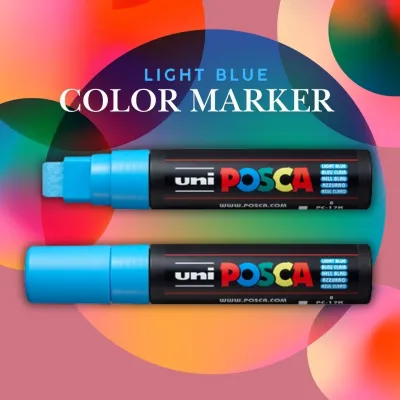
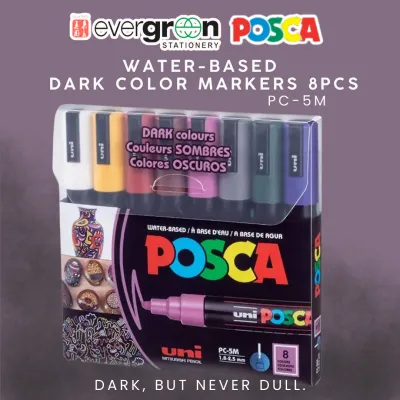
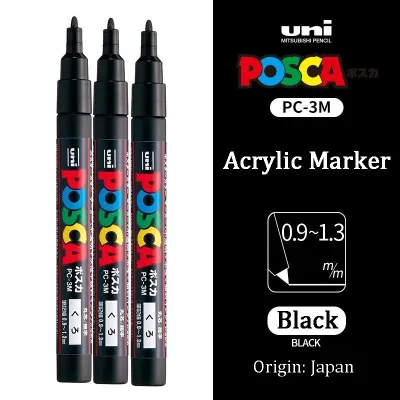
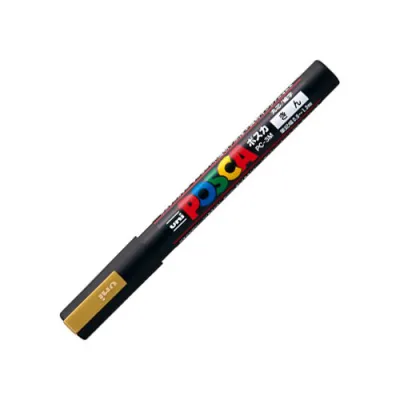
2 Lazada user ratings
Item received in good condition. Delivery was good. Overall nice.
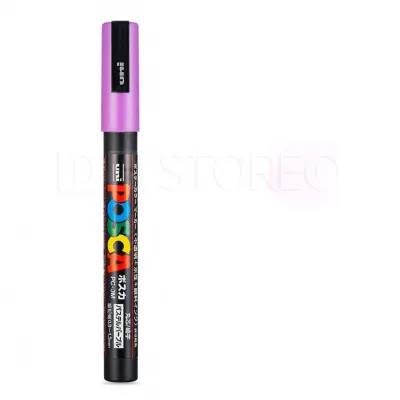
21 Lazada user ratings
The shipping was quick, and the customer service was really nice and patient. The pen writes clearly, feels great in hand, and the writing e…Read full reviewShow less
The shipping was quick, and the customer service was really nice and patient. The pen writes clearly, feels great in hand, and the writing experience is super smooth. I would definitely buy it again.
bought 5 markers. the items are packed very nicely and very securely(bubble wrap in box). i received a small free gift too, thank you so muc…Read full reviewShow less
bought 5 markers. the items are packed very nicely and very securely(bubble wrap in box). i received a small free gift too, thank you so much!
Durability:seems good Color Variety:good Ink Quality:good, can write on well as ink flows smoothly
I got the product, and it's really useful. I'll definitely come back for more next time!
It's alright! You get what you pay for! Just for the kids to doodle and pass the time!
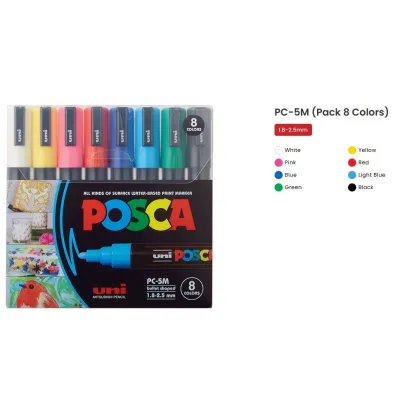
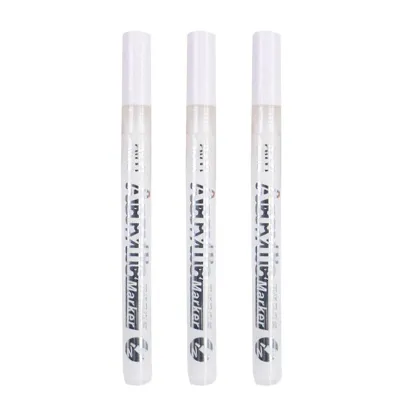
92 Lazada user ratings
Suitable for art projects on canvas, stone materials, metal, ceramics, and glass. Features vibrant, sharp colors and smooth acrylic pens wit…Read full reviewShow less
Suitable for art projects on canvas, stone materials, metal, ceramics, and glass. Features vibrant, sharp colors and smooth acrylic pens with easy-to-control flow—perfect for DIY crafting projects.
Ships from overseas take a long time; the price is affordable—definitely worth it. Haven’t even gotten around to using it yet. Message from …Read full reviewShow less
Ships from overseas take a long time; the price is affordable—definitely worth it. Haven’t even gotten around to using it yet. Message from Thailand.
I’ve received the product. It took a bit longer than expected for delivery. The pen works well, but the lines are a bit too thick when I use…Read full reviewShow less
I’ve received the product. It took a bit longer than expected for delivery. The pen works well, but the lines are a bit too thick when I use it.
Received in about 10 days time. Item was well packed with no damage to it's a good price and I would recommend.
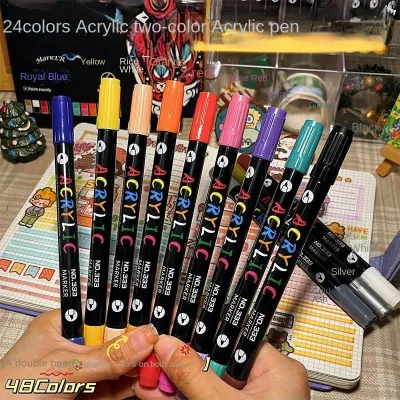
27 Lazada user ratings
received in super messy state. the plastic case is damaged and the colours are super messy and 1 of the orange is broken, and there are few …Read full reviewShow less
received in super messy state. the plastic case is damaged and the colours are super messy and 1 of the orange is broken, and there are few repeated colours. lucky my teenage girl is able to accept it otherwise I'll have to go thru the trouble to return. for ocd ppl like me I had to rearrange all the colours.
Durability: Very durable, Color Variety: great Ink Quality: opaque and smooth Great for creative projects, High color intensity, Had a group…Read full reviewShow less
Durability: Very durable, Color Variety: great Ink Quality: opaque and smooth Great for creative projects, High color intensity, Had a group of children test the quality and their works turned out smooth and effortless
Very durable, So many colors!, Rich ink color, Perfect for DIY and crafts, Non-toxic and safe to use, Bought similar ones and am trying diff…Read full reviewShow less
Very durable, So many colors!, Rich ink color, Perfect for DIY and crafts, Non-toxic and safe to use, Bought similar ones and am trying different brands to compare. Great price! Thanks seller!
Well received. Hopefully it's good to use and long lasting. Both ends are with sharp tips.
Ideal for calligraphy, High color intensity, Ink Quality:High-quality
Prices are valid at publication and may change. Please refer to the product page for the latest price.
In contrast, Sharpie paint markers are highly recognized for their oil-based formulation, though the brand also produces a separate line of water-based paint markers. The oil-based variant uses an organic solvent carrier that emits a strong, distinct paint odor during application. This requires a well-ventilated workspace, making it less suitable for small, enclosed rooms or prolonged indoor crafting sessions. The oil-based ink dries to a robust, enamel-like finish with a glossy or satin sheen, depending on the specific color. Unlike Posca’s matte look, Sharpie’s glossy finish gives projects a polished, manufactured appearance that resists water, fading, and abrasion immediately upon curing.
Drying times and environmental factors also vary between the two formulations. In warm, humid climates like Singapore’s, Posca’s water-based ink dries to the touch within two to five minutes, though full curing of the acrylic binder can take up to twenty-four hours. Sharpie’s oil-based paint dries slightly slower to the touch, often requiring ten to fifteen minutes, but its solvent-based carrier evaporates steadily even in high humidity, leaving behind a highly resilient, water-resistant layer that does not require immediate top-coating to survive basic handling.
How do Posca and Sharpie paint markers perform on different crafting surfaces?
Posca markers excel on porous surfaces where their acrylic pigments sit cleanly on top of the fibers without bleeding, while Sharpie oil-based markers offer superior, long-lasting adhesion on slick, non-porous materials without requiring immediate sealing. Choosing the right marker requires evaluating how each ink formula binds to your specific crafting medium.

On porous surfaces like thick paper, cardstock, raw wood, and canvas, Posca is highly reliable. Because the acrylic pigment sits on the surface rather than soaking deep into the fibers, colors remain incredibly vibrant. However, because it is water-based, applying heavy layers on thin paper can cause warping or pilling; it is always wise to perform an observable trial on a scrap piece of your paper to check its water tolerance. Sharpie oil-based markers, on the other hand, can cause significant bleed-through on paper and cardboard, often leaving a greasy halo around your lines as the solvent carrier spreads through the fibers. On raw wood, the oil-based paint can feather along the wood grain, whereas Posca maintains sharp, crisp edges.
On non-porous surfaces such as glass, glazed ceramics, plastics, and metals, the performance dynamic reverses. Posca markers can write smoothly on these slick materials, but the dried acrylic film does not form a permanent chemical bond. You can easily scrape a dried Posca design off glass or plastic with a fingernail or wipe it away with a damp cloth. To make a Posca design permanent on these surfaces, you must apply a clear acrylic spray sealer or bake glazed ceramics in a home oven according to specific temperature guidelines. Sharpie oil-based markers adhere aggressively to non-porous surfaces right away. The oil-based binder grips slick plastics and metals tightly, offering excellent resistance to scratching, rain, and handling without requiring an immediate protective topcoat.
For fabric and textile crafts, both markers offer distinct trade-offs in flexibility and washability. Posca can be applied to fabrics like cotton and canvas, drying to a relatively soft, flexible finish that does not stiffen the garment excessively. To make it wash-resistant, you must heat-set the design by ironing the reverse side of the fabric without steam for several minutes. Sharpie oil-based paint markers can also be used on heavy fabrics, but the oil-based paint tends to stiffen the textile fibers more significantly, creating a rougher texture. While highly resistant to washing, the oil-based ink can bleed slightly during application on loose-weave fabrics, making a preliminary test patch essential to verify line sharpness.
Which paint marker offers better control and tip options for detailed art projects?
Posca provides a highly structured, professional range of replaceable and washable tips designed for precise artistic control, whereas Sharpie paint markers utilize robust, fixed nibs built for consistent, high-flow decorative and industrial marking. Your choice between them will depend heavily on whether your project requires intricate linework or broad, rapid coverage.
Posca’s tip lineup is exceptionally diverse, categorized by standardized model numbers that correspond to specific tip shapes and millimeter widths. These range from the ultra-fine PC-1MR (0.7mm pin-type tip) and PC-1M (0.7mm bullet tip) for fine details, to the medium PC-3M (0.9–1.3mm) and PC-5M (1.8–2.5mm) for general coloring, up to the broad PC-8K (8mm chisel) and PC-17K (15mm rectangular) for large-scale murals. They even offer a brush tip (PCF-350) for calligraphy and fluid strokes. A major advantage of Posca markers is that many of their nibs are removable, washable, and reversible. If a tip becomes clogged with dried paint or dirty pigment from another layer, you can pull it out with tweezers, rinse it under tap water, and insert it back into the barrel.
Sharpie paint markers are typically categorized into broader, standard sizes: Extra Fine, Fine, Medium, and Bold. While they cover the essential bases for most craft projects, they lack the highly specific millimeter-graded options and specialty brush tips found in the Posca range. Sharpie nibs are generally made of tough synthetic fibers designed to withstand rough surfaces like concrete or rusted metal. However, these nibs are fixed and not designed to be removed or washed. If the paint dries on a Sharpie tip during storage, reviving it requires dipping the nib in a solvent like mineral spirits, which is more complex than simply rinsing a Posca tip in water.
Both brands utilize a valve-action mechanism to control ink flow, requiring you to shake the marker thoroughly to mix the pigment and binder before use. Inside each marker is a metal ball bearing that rattles to ensure a consistent mixture. To prime the marker, you press the tip down vertically onto a scrap piece of paper to open the internal valve and allow the paint to saturate the nib. Posca’s valve mechanism is highly precise, but over-priming can still cause a sudden puddle of paint. Sharpie’s oil-based valve can sometimes be more sensitive to pressure, occasionally releasing a heavy flow of paint if pressed too firmly, which requires a careful, light touch when working on detailed areas.
How should you decide between Posca and Sharpie based on your specific crafting needs?
To make the right choice, evaluate your project’s environment, the level of detail required, and your budget, as Posca is tailored for illustrative, multi-layered studio art while Sharpie excels in durable, single-layer utility and outdoor applications.
Choose Posca paint markers if your crafting involves detailed illustration, mixed-media art, or projects where you need to layer light colors over dark backgrounds. Their odorless, water-based acrylic formula makes them the ideal choice for indoor crafting in typical Singapore apartments or HDB flats where ventilation might be limited to ceiling fans or air conditioning. They are also the safer option for family crafting sessions involving children. Posca’s matte finish provides a professional, modern look on canvas, wood, and paper, and the ability to wash or replace clogged tips ensures a long lifespan for your investment.
Opt for Sharpie paint markers—specifically the oil-based variety—if you need to create permanent, weather-resistant markings on outdoor items like garden pots, metal tools, sporting equipment, or glassware. Their aggressive adhesion to slick, non-porous surfaces means your designs will resist rain, humidity, and handling without the immediate need for a clear spray sealer. The glossy, enamel-like finish is perfect for decorative projects where you want a shiny, high-contrast look.
From a budget and retail perspective, both brands are widely accessible across Singapore in local art supply stores, stationery shops, and online marketplaces. Posca markers are positioned as premium art instruments; individual markers typically retail between S$3.00 and S$8.00 depending on the tip size, with comprehensive multi-packs representing a larger upfront investment. Sharpie oil-based paint markers are often priced slightly lower per marker for standard sizes, making them a highly cost-effective choice for utility marking, large-scale industrial crafts, or projects where you only need a few basic colors. When purchasing, always double-check the product label to ensure you are selecting the correct formulation—oil-based or water-based—to match your specific crafting goals.

Community discussion
Share your experience or ask a question. Comments are reviewed before publication.