
Finding the perfect felt pen often feels like a guessing game when faced with bleeding ink, frayed tips, or lines that feather across your notebook. Selecting the right felt pen depends on matching the physical nib shape (fine, brush, or chisel) to your required line control, and choosing between water-based or solvent-based inks and dye or pigment colorants to suit your paper type and durability needs.
Understanding these technical specifications allows you to bypass trial-and-error purchases. By analyzing how different nib materials and chemical formulations interact with various surfaces, you can confidently select stationery tools that elevate your writing, drawing, or organizing tasks.
How do different felt pen nib shapes affect your lines and control?
The shape and material of a felt pen nib directly dictate the width, flexibility, and consistency of your strokes by controlling how the tip contacts the paper. Rigid tips like fine and bullet nibs offer uniform lines, while flexible brush tips and angled chisel nibs allow for variable line weights and broad coverage.
Products mentioned in this guide
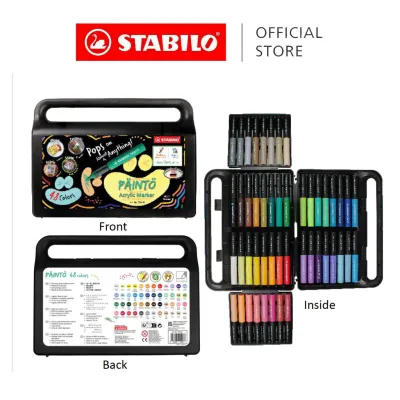
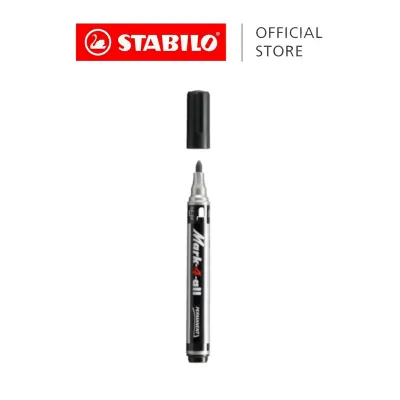
17 Lazada user ratings
Fine tip for precise writing, Smooth writing experience, Long-lasting ink, Long-lasting ink, Perfect for whiteboards
Ink Quality:Good Fast delivery and received within schedule. Nice to write on paper as well. Thanks to the seller.
Color Variety:Nice Fast delivery by the seller. Received in wrapped bubble envelope. Will buy again.
I bought black markers but it came blue. can you kindly assist to exchange? thanks
very fast delivery
Prices are valid at publication and may change. Please refer to the product page for the latest price.
Fine and bullet nibs are engineered for precision and consistency. These rigid tips produce uniform line widths, making them excellent for writing, detailing, and technical drawing. When selecting these pens, look for packaging details that specify the exact millimeter sizing, typically ranging from 0.3 mm to 1.0 mm. Additionally, check if the nib is supported by a metal protective collar, which prevents the fiber tip from bending or splitting under heavy writing pressure.
Brush nibs feature flexible, tapered tips that respond dynamically to pressure, allowing you to create variable line widths in a single stroke. They are highly favored for calligraphy, hand lettering, and expressive illustration. Before purchasing, check the tip’s material construction; nylon brush tips generally offer better rebound—snapping back to their original shape—compared to standard felt brush tips, which can soften and fray over time.
Chisel nibs are cut at an angle, presenting a broad flat edge and a sharp point. This design allows you to produce both wide strokes for highlighting and narrow lines for detailed marking simply by changing your holding angle. When evaluating a chisel nib, inspect the tip edge to ensure it is crisp and even, as rounded or poorly cut edges will result in fuzzy, inconsistent lines.
To ensure long-term performance, physically inspect the nib condition and structural integrity when evaluating pens in-store or upon delivery. Gently press the tip against a scrap piece of paper to check for wobbling inside the collar. A high-quality felt pen should feel stable, with no loose fibers, splitting, or premature dry spots during initial strokes.
What is the difference between water-based and solvent-based felt pen inks?
Water-based inks use water as the primary carrier liquid to deliver color gently without bleeding through most standard papers, whereas solvent-based inks dry almost instantly and adhere to non-porous surfaces but easily bleed through porous sheets. Your choice determines both the drying speed and the specific surfaces you can safely mark.

Water-based inks are the standard choice for everyday journaling, planning, and coloring. Because water evaporates relatively slowly, these inks give you more time to blend colors, though they may smudge if touched immediately after writing. Always check product labels for drying times and smudge-resistance claims. It is also wise to test the pen on a spare page of your notebook to observe how the paper fibers handle the moisture, ensuring there is no unwanted feathering or bleed-through.
Solvent-based inks, which commonly use alcohol as the carrier, are designed for rapid drying and permanent adhesion. They allow you to write smoothly on non-porous surfaces like plastic, glass, metal, and glossy photo paper without smearing. However, the solvent carrier penetrates paper fibers deeply, causing significant bleed-through on standard notebook paper. When using solvent-based markers, verify surface compatibility and ventilation requirements on the packaging, as some solvents emit strong odors.
To avoid ruining an expensive project, use manufacturer specifications, safety data sheets, and small test patches to confirm paper weight and ink compatibility. If you plan to use solvent-based inks, pair them with heavy cardstock or specialized bleed-proof marker paper. For standard water-based pens, a paper weight of 80 gsm to 100 gsm is usually sufficient to prevent ghosting.
How do dye and pigment inks change the longevity of your felt pen work?
Dye inks offer exceptionally vibrant, blendable colors that remain soluble and are prone to fading over time, while pigment inks contain microscopic solid particles that resist water and ultraviolet light for archival longevity. Choosing between them is a trade-off between immediate color intensity and long-term fade resistance.
Dye inks consist of fully dissolved colorants that saturate paper fibers deeply. This chemical structure results in brilliant, highly saturated colors that blend together seamlessly, making them a favorite for artistic sketching and coloring. However, because dyes are sensitive to light and moisture, you should check the packaging for stated UV and water resistance limitations. Artworks created with standard dye inks may fade if exposed to direct sunlight over several months.
Pigment inks utilize finely ground solid color particles suspended in a liquid carrier. Instead of soaking deep into the paper, these particles sit on top of the surface and bind to the fibers as the liquid dries. Look for manufacturer specifications indicating “archival,” “lightfast,” or “waterproof” properties to confirm these longevity claims. Pigment-based felt pens are highly resistant to water spills and UV exposure, making them the industry standard for signing legal documents, sketching outlines, and archival journaling.
To verify actual resistance and fading behavior, read product labels carefully and perform simple water or light exposure tests on sample swatches. You can brush a wet cotton swab over a dried ink stroke to check for water solubility. For lightfastness, leave a test strip on a sunny windowsill for a week while keeping half of the strip covered, then compare the two sides to observe any color loss.
Which felt pen combinations are best for writing, drawing, or marking?
The best felt pen combination pairs a rigid fine nib with water-based ink for everyday writing, a flexible brush nib with blendable dye or pigment ink for illustration, and a chisel nib with fast-drying ink for highlighting and labeling. Matching these physical and chemical traits to your specific surface ensures clean, smudge-free results.
For everyday writing and note-taking, match fine or bullet nibs with water-based inks. This combination provides the consistent line width needed for neat handwriting while ensuring the ink does not bleed through to the back of your notebook pages. Always run a quick test patch on an inconspicuous page of your planner to confirm that the paper can handle the ink without feathering.
For illustration and calligraphy, pair brush nibs with inks that meet your specific blending and longevity needs. If you want to create soft gradients, dye-based brush pens are highly effective, but you must verify that your paper is thick enough—ideally 120 gsm or higher—to prevent surface pilling. If you plan to paint over your ink outlines with watercolors, choose a pigment-based brush pen and allow it to dry completely before applying water.
For highlighting and labeling, select chisel nibs and check ink drying times on your target surface. If you are highlighting printed text, a water-based chisel pen prevents the underlying ink from smearing. For labeling plastic storage bins or metal files, choose a solvent-based chisel marker to ensure the ink adheres permanently and dries instantly without smudging.
Ultimately, building a reliable stationery kit requires cross-referencing your primary writing surface, required permanence, and preferred stroke style with verified product specifications. By selecting the exact nib shape and ink formulation for each task, you ensure your felt pens perform beautifully and last through every project.
Community discussion
Share your experience or ask a question. Comments are reviewed before publication.