
Finding the perfect fountain pen experience often comes down to a single, crucial component: the nib. Lamy fountain pens are celebrated worldwide for their reliable performance and user-friendly designs, but selecting the right nib size can feel overwhelming if you are new to the hobby. The ideal choice depends on your natural handwriting size, the pressure you apply while writing, and the paper you use daily. By understanding how these factors interact with Lamy’s Extra Fine (EF), Fine (F), Medium (M), and Broad (B) options, you can find a pen that feels like a natural extension of your hand.
Assess Your Handwriting Size and Pen Pressure
To find your ideal nib, begin by analyzing your natural writing habits on a standard sheet of lined paper. Write a few sentences at your normal speed without trying to make your handwriting look unusually neat. This exercise establishes a realistic baseline for how you actually use a pen in daily life.
Measure the height of your lowercase letters, such as “a,” “e,” or “o.” If these letters are consistently under 2 millimeters tall, your handwriting is considered small. Letters measuring between 2 and 4 millimeters fall into the medium category, while any lowercase characters exceeding 4 millimeters are classified as large. Next, observe the spacing between your letters and individual words. Tight, compact handwriting requires a finer line to keep characters legible and prevent loops from filling with ink, whereas wide spacing and open cursive loops can easily accommodate broader strokes.
Products mentioned in this guide
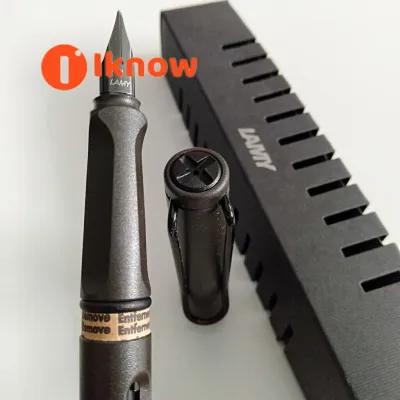
1 Lazada user ratings
It was bought as a gift. I hope it works well.
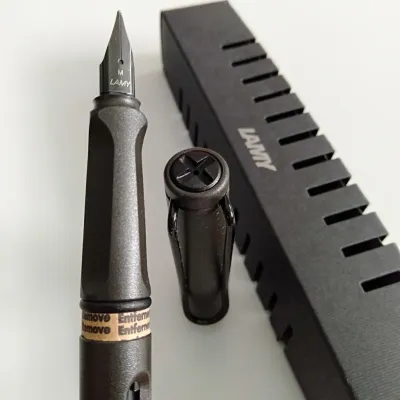
94 Lazada user ratings
Delivery unsatisfactory: 1) Unable to comment in the 'Delivery Review Section' as it could not be activated; hence, my comments on delivery …Read full reviewShow less
Delivery unsatisfactory: 1) Unable to comment in the 'Delivery Review Section' as it could not be activated; hence, my comments on delivery have to appear here. 2) Stuck for some time at Singapore custom side, normally 1 or 2 days for clearance. 3) Need 3/4 attempts to locate the parcel as it was placed outside my house at the curb near the drain - normal delivery placement is outside the door, the gate is not locked. See photo below:
Box is dented but the set appears genuine. If it is smooth to write, will buy more.
item received and we'll packed, pen writes beautiful, love it and will buy again
Good for price but box is quite flimsy. Bought it as a gift so haven't opened.
Good writing, good quality, acceptable delivery time . Good value
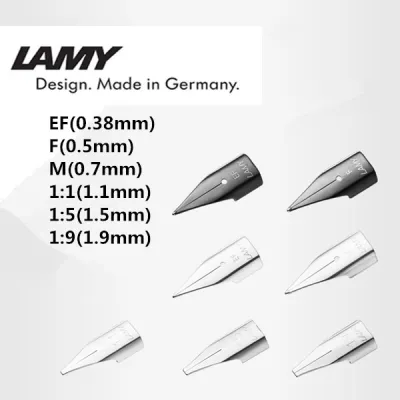
65 Lazada user ratings
Great value for the price, Excellent customer service, Easy to change nibs... Thank you seller 👍🏽👍🏽👍🏽 Quality:Very good Design:Stylish
Design:Stylish Quality:Very good High-quality stainless steel, Great value for the price,.. Thank you seller...
Perfect for calligraphy enthusiasts, Compatible with multiple LAMY pens,
Quality: good replacement tip. Doesnt feel awkward after replacement
Fast delivery, packed in protective case. Look good, not used yet.
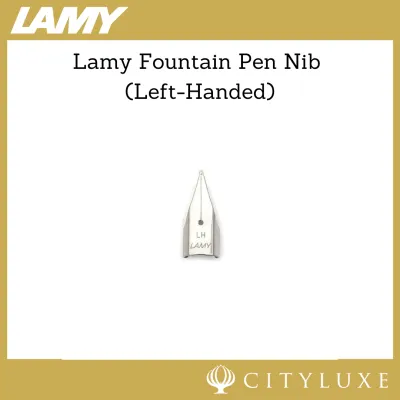
3 Lazada user ratings
Smooth like butter when writing, no scratchiness like the normal right-handed nib. Ink flow may be alittle thick for those who prefer 0.38/0…Read full reviewShow less
Smooth like butter when writing, no scratchiness like the normal right-handed nib. Ink flow may be alittle thick for those who prefer 0.38/0.5
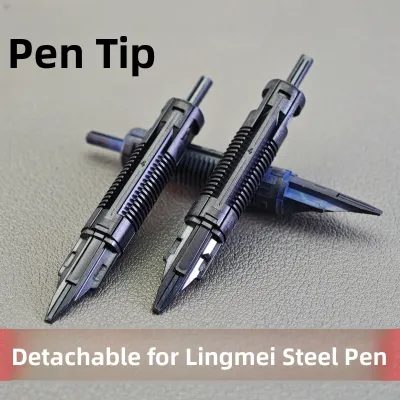
5 Lazada user ratings
It's usable, but the workmanship is just average.
The split design lets the water flow smoothly.
Great! I've bought it multiple times.
Prices are valid at publication and may change. Please refer to the product page for the latest price.
Your writing pressure is another critical variable that determines how ink flows onto the page. Turn your test paper over and run your fingers across the back of the sheet. If you feel distinct ridges or deep indentations, you have a heavy writing hand; if the paper remains smooth, you write with a light touch. Heavy pen pressure naturally spreads the metal tines of a nib slightly apart, which increases the ink flow and makes the written line appear wider. Light pressure requires a well-tuned nib that releases ink easily with minimal downward force to prevent skipping or dry lines.
Finally, consider your writing speed and pen angle. Fast writers need a consistent, wet ink flow to keep up with rapid strokes, while slow writers might prefer a more controlled flow to prevent ink from pooling. Your pen angle also dictates which part of the tipping material contacts the paper, affecting both smoothness and line width.
Map Your Style to Lamy Nib Widths (EF, F, M, B)
Lamy nibs follow Western sizing standards, which generally produce slightly wider lines than Japanese nibs of the same designation. A Lamy Fine, for example, often writes similarly to a Japanese Medium-Fine. Understanding this distinction helps set accurate expectations when choosing your width.

The Extra Fine (EF) nib is engineered for precision and compact writing styles. If your lowercase letters are under 2 millimeters tall or if you frequently write detailed notes in the margins of textbooks and compact planners, the EF nib is highly suitable. It keeps tiny characters sharp, clean, and perfectly legible. Because the EF nib has a very small contact point with the paper, it performs best with a light writing pressure; users who press down heavily may find that the fine tip digs into the paper fibers, creating resistance. It is the ideal choice for precise, delicate work on standard paper.
The Fine (F) nib is the versatile standard for everyday writing and is the most popular choice for general use. It accommodates medium-sized handwriting beautifully, offering an excellent balance between line definition and smooth ink flow. A Lamy Fine nib handles moderate pen pressure and varying writing speeds without skipping, providing a sufficient flow of ink to show off the color of your ink while remaining controlled enough to prevent excessive spreading on standard notebook paper.
The Medium (M) nib is designed for larger handwriting and those who prioritize a smooth, gliding sensation. If your lowercase letters are 4 millimeters or taller, the Medium nib allows your natural style to flow without making your writing look cramped or messy. Medium nibs deliver a wetter line of ink, which highlights the unique shading and sheen characteristics of specialized fountain pen inks. This size is also excellent for signatures, as the broader stroke lends an elegant, authoritative appearance to your writing on official documents.
The Broad (B) nib is built for bold statements, large handwriting, and expressive writing. If you have an expansive writing style or use your fountain pen primarily for signing documents, the Broad nib delivers a thick, rich line that stands out clearly on the page. With its larger, rounded tipping pellet, the Broad nib glides effortlessly across the paper with minimal friction. This makes it highly comfortable for users who dislike feedback, though it requires large spacing to prevent letters from merging into solid blocks of ink.
Evaluate Paper Quality to Prevent Bleeding and Scratching
The interaction between your nib and your paper is just as important as the nib size itself. Fountain pens rely on liquid, water-based inks that behave differently depending on the texture, weight, and coating of the writing surface. Broader nibs, such as the Medium and Broad sizes, deposit a significant volume of ink onto the page, which can cause feathering and bleeding on standard copy paper or inexpensive notebook sheets.
To enjoy broader nibs without these issues, pair them with fountain-pen-friendly paper. Look for notebooks that specify a higher paper weight, typically 80 gsm or more, and those with a smooth, coated surface that resists rapid ink absorption. Finer nibs like the Extra Fine and Fine sizes deposit very little ink, making them highly tolerant of low-quality or highly absorbent paper, which makes them excellent for filling out forms or taking notes in standard school exercise books.
However, finer nibs are more sensitive to paper texture. On rough, toothy, or recycled paper, the sharp tipping of an EF or F nib can catch on loose fibers, creating a scratchy sensation or collecting paper dust that clogs the ink channel. Before finalizing your nib choice, review the specifications of the stationery you use most frequently. If your daily routine involves standard copy paper, stick to an EF or F nib; if you have the freedom to choose premium, coated notebooks, you can confidently explore M and B nibs.
Test and Adjust Your Lamy Nib Selection
Once you have selected a starting nib size, perform a practical writing test. Use your typical daily paper and sit in your normal writing posture. Write a full paragraph rather than just a few letters, as this allows your hand to settle into its natural rhythm. Pay close attention to the tactile feedback; a correct match should feel comfortable, with the pen gliding smoothly without requiring you to press down.
If you notice ink pooling in the loops of your letters, or if the pen skips and leaves dry gaps, your nib size or ink flow may be mismatched to your writing speed. If the pen scratches the paper to the point of tearing fibers, or if you must hold the pen at an unnatural angle to get a consistent line, the nib may need adjustment. Do not attempt to force the nib or apply excessive pressure, as this can permanently bend the metal tines.
One of the greatest advantages of Lamy pens is their modular design. Most models, including the Safari, Al-Star, and Studio, use the same friction-fit nib design, allowing you to slide the old nib off and slide a new one on. Always verify your specific pen model’s compatibility with replacement nibs before purchasing. If you suspect your new nib has a manufacturing defect, such as misaligned tines or a restricted ink feed, avoid DIY adjustments that might void your warranty. Take the pen to an authorized retailer or consult a professional nib specialist to ensure it is tuned correctly.
Frequently Asked Questions (FAQ)
Are Lamy nibs interchangeable across all pen models?
Lamy nibs are highly interchangeable, but there are exceptions. The standard steel and gold nibs fit a wide range of popular models, including the Lamy Safari, Al-Star, Vista, Joy, LX, Studio, and Scala. However, certain premium models, such as the Lamy 2000, feature a unique hooded design and are not compatible with these standard interchangeable nibs. Always check your specific model’s product manual or official manufacturer guidelines before attempting a swap.
Why does my Lamy EF nib feel scratchy?
An Extra Fine nib has a very small surface area contacting the paper, which naturally produces more feedback than broader sizes. If the sensation feels excessively scratchy, check your writing angle and ensure you are not applying heavy downward pressure. Rough paper surfaces or dry inks can also exacerbate this feeling. If the issue persists on smooth paper with light pressure, inspect the nib under a magnifying glass to check for misaligned tines, or consult a professional stationery retailer for assistance.

Community discussion
Share your experience or ask a question. Comments are reviewed before publication.